
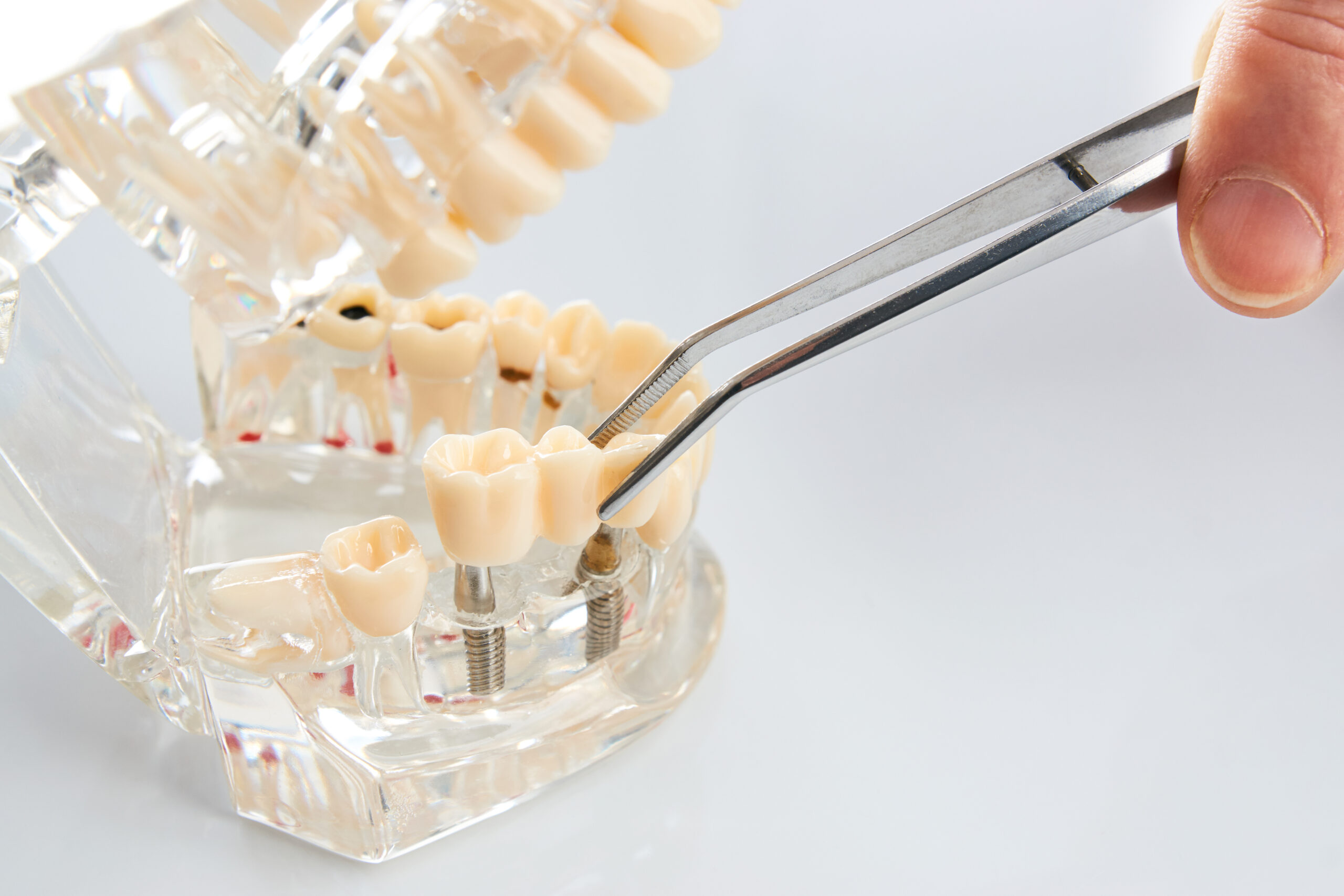
Missing a tooth changes more than your smile. Chewing shifts to one side, speech can soften around certain sounds, and the surrounding teeth slowly drift toward the open space over time. Two of the most common solutions for replacing that missing tooth are a dental bridge and an implant restorative procedure, and the right choice depends on your bone health, budget, and how long you want the result to last.
At Eccella Smiles, we walk you through both options in plain language before recommending a path forward. We know a missing tooth feels urgent, and we want you to leave your consultation with a clear understanding of what each treatment involves, not just a list of prices.
What Is a Dental Bridge?
A dental bridge fills the gap left by a missing tooth using the teeth on either side of that gap as anchors. We shape those neighboring teeth to accept crowns, then fuse a false tooth, called a pontic, between them, so the whole unit sits fixed in your mouth rather than removable like a denture.
Who Tends to Choose a Bridge
Patients often lean toward a bridge when the teeth next to the gap already need crowns for other reasons, when timeline matters more than longevity, or when a lower upfront cost fits their budget better. A bridge can often be completed in two visits, with a temporary bridge worn while the permanent piece is fabricated, though it does mean altering healthy tooth structure on both sides of the gap.
What Is an Implant Restorative Procedure?
An implant restorative procedure replaces a missing tooth from the root up. A titanium post is placed in the jawbone, where it fuses with the bone over several months in a process called osseointegration, and once that post has fully integrated, we attach an implant on top to replace the visible crown of your tooth.
Bone Health Matters Here
This approach does not touch the neighboring teeth at all, which many patients find appealing since it preserves natural tooth structure that a bridge would otherwise require us to reshape. Because the post needs healthy jawbone to fuse with, patients who have experienced significant bone loss in the area may need additional preparation, which we evaluate during your consultation using imaging that shows exactly how much bone is present at the site.
Comparing Longevity and Long-Term Value
Tooth loss remains a meaningful concern nationally. According to the National Institute of Dental and Craniofacial Research, 2.2% of adults between the ages of 20 and 64 have no remaining natural teeth, and average tooth count declines further as patients get older. Replacing even one missing tooth early tends to prevent the shifting and bite changes that lead to losing more teeth down the road.
Bridges typically last ten to fifteen years before needing replacement, since the anchor teeth carry extra load and decay or gum disease affecting either one can compromise the whole bridge. An implant restorative procedure, by contrast, is built to last decades once healed, since the titanium post integrates directly with your jawbone rather than relying on neighboring teeth for support.
Weighing longevity against upfront investment often comes down to a few clear tradeoffs.
- Bridges cost less upfront and are completed faster, but usually need replacement within ten to fifteen years
- Implant restorative procedures cost more initially and take longer to complete, but can last for decades with proper care
- Bridges require reshaping the neighboring teeth, while implant restorative procedures leave them untouched
- Bone density affects candidacy for an implant restorative procedure but not for a bridge
Weighing these tradeoffs against your own timeline, budget, and jaw health is exactly what your consultation is for, and we will walk through your imaging together so nothing feels like a guess.
How Eccella Smiles Helps You Decide
We do not believe in a one size fits all recommendation, and Dr. Sox and our team review your dental and medical history, take imaging to assess bone density at the gap site, and talk through how the missing tooth is affecting your daily bite and speech before suggesting a path forward. From there, we lay out realistic timelines and costs for both a bridge and an implant restorative procedure, so you leave your visit with a plan built around your smile rather than a generic recommendation.
We also stay current on techniques like CEREC same day crown technology, which can shorten treatment time for the crown portion of either approach, and our restorative dentistry team welcomes questions about financing and insurance during your visit. If a missing tooth has been bothering you, do not wait for the gap to cause more shifting or bone loss, and schedule a consultation with us today so we can help you find the option that fits your life.